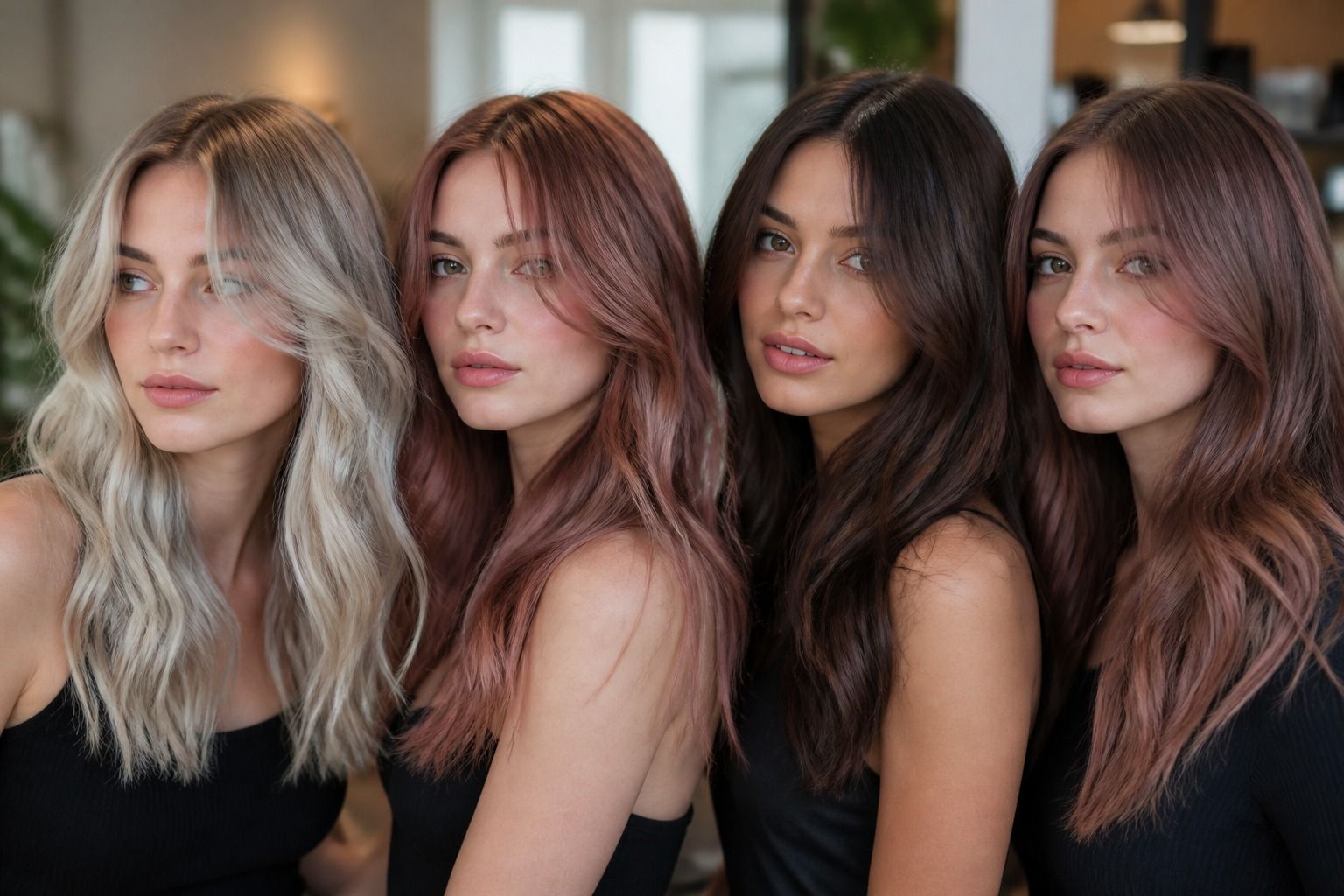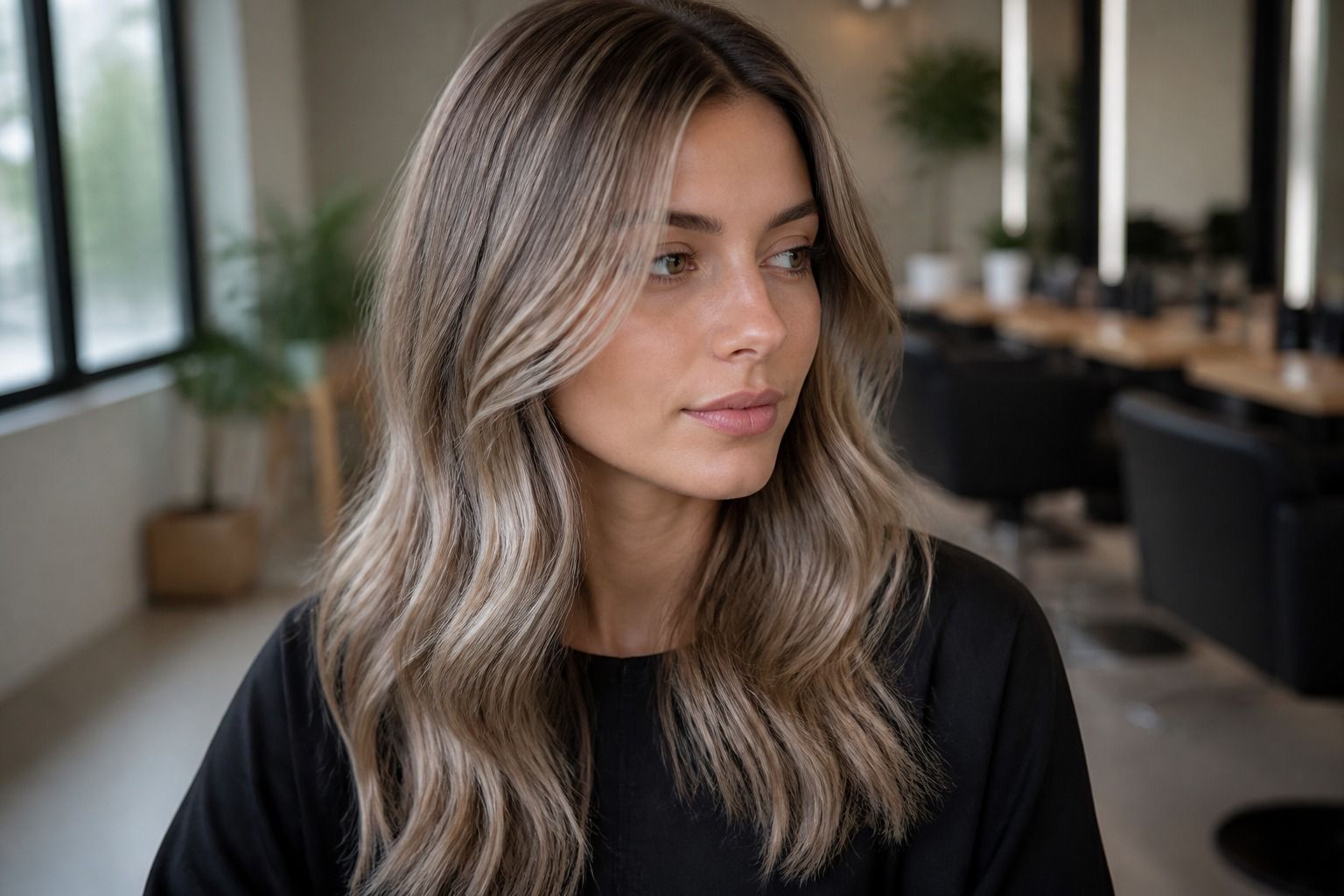
Cool Summer hair color works best when it looks calm, clear, and slightly muted rather than icy or dramatic. That is the part people often miss. A Cool Summer palette can handle ash, soft beige, cool brown, rose brown, and even a softened black, but the shade still has to sit politely next to the skin, eyes, brows, and natural regrowth. The goal is not to chase the coldest color in the swatch book. It is to choose a cool hair color that removes brassiness without making the face look tired.
Cool does not mean severe
The easiest mistake is treating Cool Summer as a command to go darker, flatter, or more silver than the person actually needs. Cool and dark are different decisions. Cool describes the undertone: blue, violet, or soft ash instead of orange, gold, or copper. Dark describes depth. Someone with a fair Cool Summer look may need a light ash blonde or cool beige blonde, while someone with deeper natural hair may look better in ash brown or a soft black that has been blurred at the roots.
Blonde directions that stay soft
Ash blonde is the obvious Cool Summer choice, but it has a wide range. Pale silver ash can be striking on the right person, especially when the natural base is already light and the skin has very little warmth. On many Cool Summers, though, a cool beige blonde is kinder. It keeps the yellow under control without pushing the whole look into chalky grey. Think oyster blonde, mushroom blonde, beige ash, or a clean dark blonde with violet toner used carefully.
If your hair lifts warm, ask the colorist what level they realistically expect to reach before toning. Hair that stops at orange-yellow cannot become a clean pale ash without enough lift, and pushing it too far can leave it dry or patchy. In that case, a deeper cool blonde may be the better first appointment. A smoky dark blonde with a root blend can look planned while the hair recovers, then move lighter over time if the condition allows it.
Highlights need the same restraint. Chunky, high-contrast ribbons can feel too sharp on a muted Cool Summer face, even if the tone is technically cool. Finer highlights, soft balayage near the mid-lengths, or a veil of cool beige around the face usually works better. The color should read as light moving through the hair, not as stripes. If your brows are naturally soft taupe or ash brown, matching that softness around the root area keeps the blonde believable.
Brown, rose brown, and soft black options
Cool brown is often the most wearable answer for Cool Summer hair colors because it respects the muted side of the palette. Ash brown, mushroom brown, cocoa brown without red, and cool espresso all sit in this family. The shade should avoid obvious mahogany, chestnut, caramel, or golden brunette unless those warmer pieces are very small and balanced by cooler tones. Warm brown can look healthy in the salon chair and then oddly rusty under bathroom light.
Rose brown can work when it is dusty rather than candy pink. A muted rose brown has a violet-brown base with a soft blush cast, so it cools the hair while giving the face a little life. This is useful for someone who finds pure ash brown too flat. The caveat is fade. Pink and violet pigments can wash out quickly, especially on porous ends, so the shade needs gentle shampoo, cooler water, and realistic expectations. If the hair has old highlights, the rose may grab brighter on those pieces.
Soft black is the riskiest direction but not impossible. The word soft is doing a lot of work. A blue-black box-dye effect can make Cool Summer skin look paler in a harsh way, and it can exaggerate every bit of regrowth. A softened black or deepest ash brown is usually safer: slightly smoky, not inky, with a root shadow that does not form a helmet. If the brows are light or the natural base is medium, jump to soft black only after trying a deep cool brown first.
How to keep ash shades from looking dull
Ash is useful because it cancels warmth, but too much ash can make hair look dusty. This is where many cool summer hair color choices go wrong. The client asks for no brassiness, the formula overcorrects, and the final result has no movement. Healthy hair still needs reflection. A beige ash, pearly brown, or cool brown with a tiny amount of softness often looks better than a strict grey cast from roots to ends.
Violet toner is a tool, not a lifestyle plan. Purple shampoo can help a blonde stay clean between appointments, but using it every wash can turn creamy blonde into a flat, smoky tone that does not suit the haircut or skin. Brunettes have a similar issue with blue shampoo. It can quiet orange, yet it can also make lighter ends look murky. Use toning products when warmth appears, then pause. Your hair should not look freshly toned every single day.
Condition changes the color more than people expect. Dry ends absorb ash harder, so the same gloss can look elegant near the root and grey on the ends. Before going cooler, trim the most damaged pieces or ask for a bond-building treatment if your salon offers one. At home, a simple routine is enough: gentle shampoo, conditioner through the mid-lengths and ends, heat protection before styling, and fewer hot-tool passes. Cool color looks cleaner when the surface of the hair is smooth.
Choose contrast from your starting point
Cool Summer usually sits in a low-to-medium contrast range. That does not mean every person needs the same depth. Look at the relationship between skin, eyes, brows, and natural hair. If your brows and lashes are soft, a heavy dark color can make the face look separate from the hair. If your eyes are deeper grey-blue, grey-green, or cool brown and your natural base is already brunette, a deeper cool brown may feel completely natural.
One useful test is to compare two photos of yourself: one in clean daylight with your hair pulled back, and one with your hair framing your face. If the face looks clearer when the hair is away, the current color may be too warm, too heavy, or too contrasted. If the face loses definition with the hair pulled back, you may need a little depth around the face, perhaps lowlights, a cool brown gloss, or a root smudge rather than all-over lightening.
Contrast can also come from placement. A Cool Summer blonde does not need to be pale everywhere. A darker root blend with soft cool pieces around the face can give shape without a hard line. A brunette can use barely visible cool ribbons through the mid-lengths instead of a full transformation. The point is to adjust the frame first. If the frame works, the rest of the hair can stay quieter.
Plan the upkeep before you book
The right shade is partly the one you can maintain without resenting it. Cool tones fade. Blonde warms up, brown can turn reddish, and rose brown may lose its blush faster than expected. If you wash daily, swim often, heat style most mornings, or spend a lot of time in sun, ask for a shade that has a graceful fade path. A slightly deeper cool beige blonde often ages better than a very pale ash. A cool brown gloss may be easier to refresh than full permanent color.
Talk through regrowth before the color is mixed. For grey coverage, a cool brunette can look flat if every strand is opaque from root to end. A demi gloss or softened permanent root may look more believable, depending on the grey percentage and the natural base. For blondes, a shadow root or root melt can buy time between appointments. If the hairline grows warm, your colorist may place cooler brightness around the face while keeping the root softer.
Bring reference photos, but bring the right kind. One photo for tone, one for depth, and one for placement is more useful than ten nearly identical celebrity images under studio lighting. Say what you dislike too: orange brassiness, yellow blonde, red-brown, harsh black, obvious stripes, or muddy ash. Those words help the colorist avoid the common traps. A careful cool summer hair color appointment is rarely about copying a single swatch. It is about finding the coolness, depth, and contrast level your hair can keep looking good after the first wash.