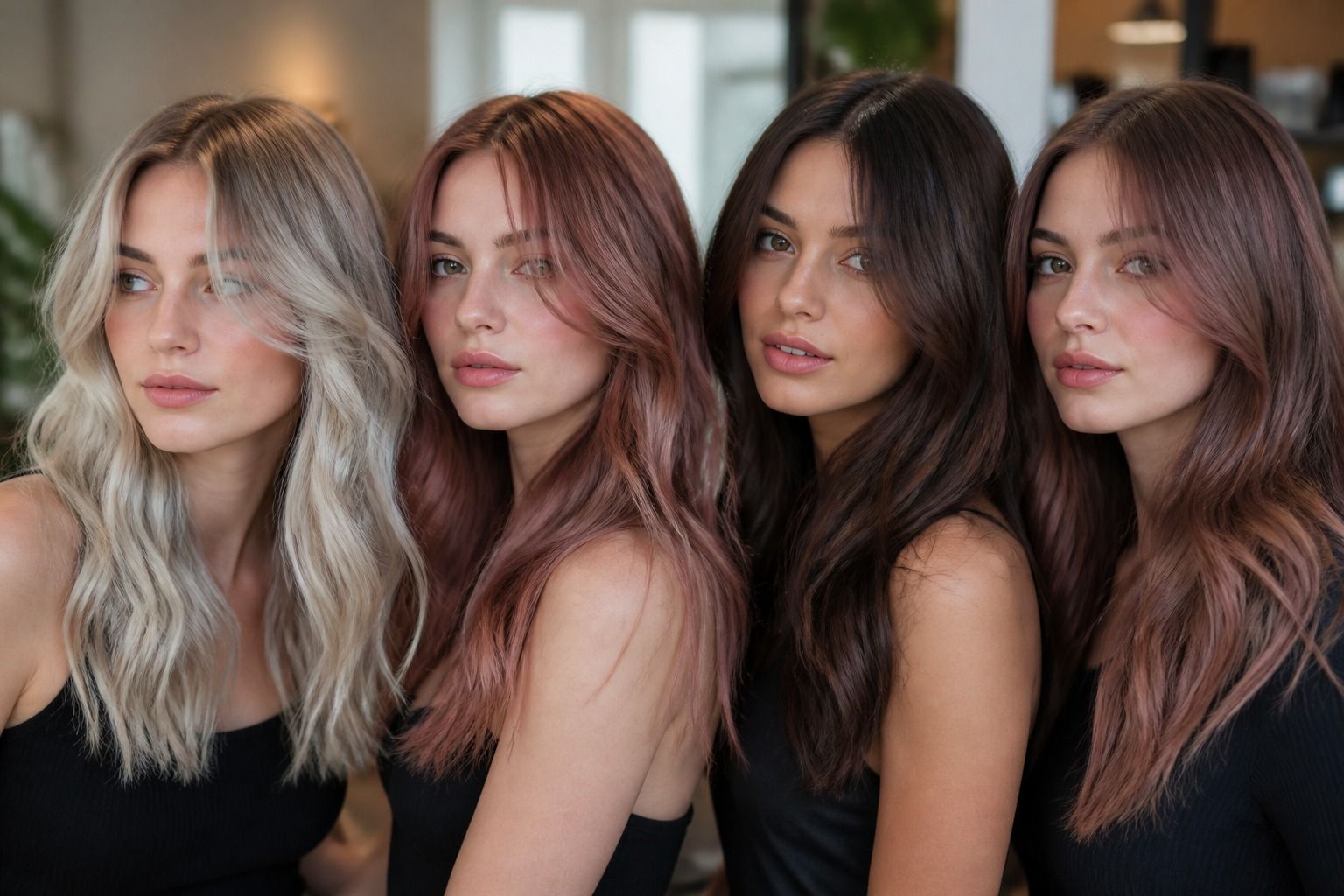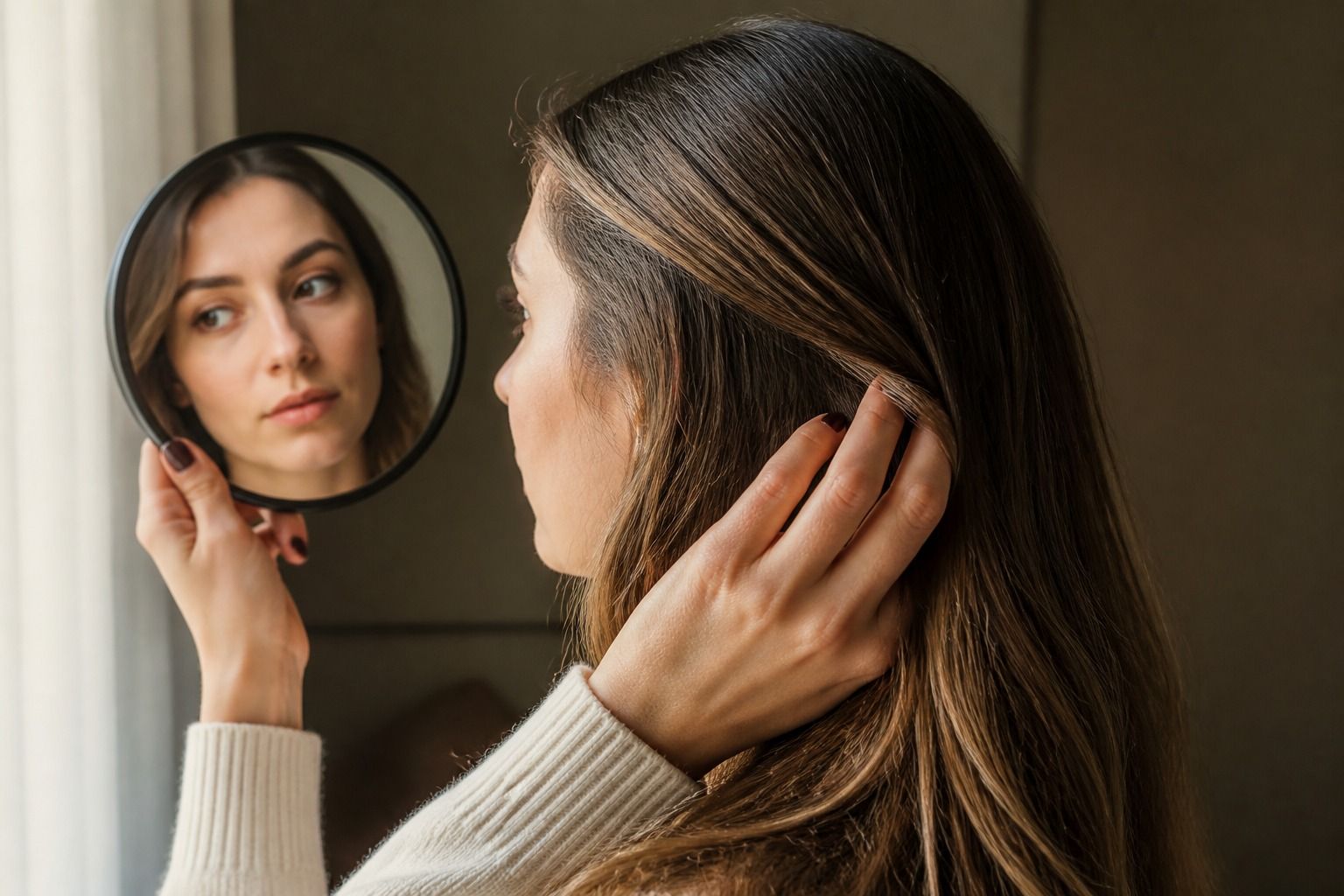
Most hair color analysis gets messy for one boring reason: people judge the shade they are wearing now, not the hair their body actually grows. The sun has warmed the ends, old gloss is clinging to the mid-lengths, and a few gray strands may be changing the contrast around the face. If you want a useful read on your best browns, blondes, reds, or soft black tones, start where the evidence is cleanest. That usually means the first half inch to two inches at the roots, seen in daylight, with the rest of your color history treated as context rather than proof.
Why the roots tell a cleaner story than the lengths
Your roots have not had as much time to collect opinions from the world. They have not been lifted by beach weekends, dulled by hard water, warmed by a box dye from last winter, or toned down by a salon gloss that looked perfect for three weeks. In hair color analysis, that newer growth is the closest look at your natural hair color, especially if you have at least six weeks of regrowth.
Read blonde, brown, and dark bases differently
Natural blonde hair rarely stays one simple color from childhood to adulthood. Many people who were bright blonde at eight are dark blonde or light brown by thirty. For analysis, the current root wins. A dark blonde base can carry beige, ash, wheat, or soft gold notes, and those notes change which salon blondes look believable. A cool beige blonde can look expensive on one person and grayish on another. A buttery blonde can look fresh on someone with warm eyes and oddly yellow beside cooler skin.
Brown hair needs the same patience. Light brown and medium brown bases often contain hidden warmth, even when the first impression is neutral. Check what happens when the hair is pulled against a white towel and then against a cream sweater. If the roots look flatter and cooler next to white but richer next to cream, warmth may be part of the natural base. That does not mean you must go golden. It means you should be careful with very smoky formulas, which can make the face look tired if the natural base wants a little softness.
Dark brown and black-brown bases are where people overcorrect most often. A very dark base has contrast built in, so tiny changes show. Blue-black dye may look sleek in a photo but harsh on a person whose natural hair is dark espresso with a brown reflection. On the other hand, adding caramel ribbons to a deep base can look disconnected if the lift is too bright or too orange. With dark hair, a safer first question is not how light can it go, but how much contrast the face already carries between hair, brows, eyes, and skin.
Separate natural color from old dye and sun fade
Old dye can be persuasive. It sits right where you see it: around the face, through the lengths, in photos, and in the mirror when your hair is down. But previous dye is evidence of what happened to the hair, not evidence of your natural coloring. A brunette gloss can make the skin look clearer for a month and then leave a reddish cast. Bleached ends can convince you that you are warmer than you are. A purple shampoo habit can make blonde lengths look cooler than the root ever was.
The simplest audit is a three-part note: roots, mids, ends. Roots might be level 6 neutral brown. Mids might be level 7 warm brown from an old balayage. Ends might be level 8 gold because they have been lifted twice and spent a summer outside. That note is more useful than saying your hair is brown. It tells a colorist where the canvas is uneven, and it tells you why a shade you loved in a filtered photo may not land the same way on your head.
Sun fade deserves its own caution. Hair around the hairline and crown can lighten faster than the underside, so it may look like you naturally have highlights. Sometimes you do. More often, the pattern is exposure. If the top layer is honey but the nape is ash brown, do not build the whole analysis around the honey. Use it as a clue that your hair lifts warm, which is helpful when planning highlights, but keep the natural base anchored at the root and underside.
If you have had black box dye, red dye, henna, or repeated bleach, be even more conservative. Color analysis hair advice can help you choose a direction, but it cannot safely map a correction. Those histories can react unpredictably. The useful takeaway is the plan you bring to a professional: what your natural roots look like, what the lengths have been through, and what result you want to avoid.
How gray hair changes the comparison
Gray hair does not erase your natural color; it changes the contrast. A person who used to be medium brown may now have silver at the temples, darker brown at the nape, and softer brown through the crown. Another person may be almost fully silver at the hairline while the back still grows dark. Those patterns lead to different choices. Full coverage, gray blending, lowlights, highlights, and gloss all behave differently depending on where the gray sits.
Do not judge gray only by percentage. Ten percent gray concentrated at the temples can affect the face more than twenty percent scattered through the back. If the front has bright white pieces, a flat dark dye can create a hard regrowth line after two weeks. If the gray is peppered through a dark base, a few cool lowlights or muted highlights may soften the grow-out better than one solid color. The right answer depends partly on maintenance tolerance, not just palette theory.
There is also a texture issue. Gray strands can be wirier, more reflective, or more resistant to color. That means the same formula may grab differently on gray and pigmented hair. If your goal is a low-maintenance result, say that plainly before anyone mixes color. It may push the plan toward blending and dimension rather than opaque coverage. If you want the gray covered because you dislike the sparkle at the part, that is fine too. The analysis should support the life you actually want to maintain.
Use eye color and contrast without overreading them
Eye color helps, but it should not bully the whole decision. Hazel eyes with amber flecks may explain why warm brunette looks alive. Blue-gray eyes may make very golden blonde feel too loud. Deep brown eyes can hold richer hair depth beautifully. Still, eyes are only one part of the picture. Skin undertone, brow color, natural root depth, and personal contrast all have a vote.
A useful check is to compare your face with the hair covered, then with the roots visible. Pull on a charcoal top, then a warm taupe or olive one. If your eyes sharpen when the root color is visible and the clothing sits quietly, your natural depth may be doing useful work. If the hair disappears and your features feel washed out, you may need either more contrast or a cleaner tone. This is where many people discover that the problem was not blonde versus brown. It was muted versus clear, or soft contrast versus strong contrast.
Be careful with dramatic online rules. Warm eyes do not automatically require copper hair. Cool skin does not automatically ban gold. Natural red in the beard or brows can matter even if the scalp hair is brown. Dark brows with pale skin can make a soft blonde look unfinished unless the root is shadowed. Hair colour analysis is better when it behaves like a fitting room: try the theory against the actual face, in ordinary light, before making it a rule.
Write a plan your colorist can actually use
Before an appointment, take three daylight photos: roots at the part, hairline around the face, and the underside near the nape. Add one full-face photo with no filter and your hair pulled back enough to show the roots. If you can, include a photo of the shade you liked best on yourself, not just a celebrity reference. A celebrity photo can show mood; your own photo shows what has already worked with your features.
Then write a short plan. Start with your natural base as honestly as you can: dark blonde with beige roots, medium brown that pulls warm, very dark brown with soft brown reflection, or mixed gray over an old brunette base. Add color history: salon highlights last spring, box dye two years ago, gloss every few months, henna, bleach, swimming, hard water, or anything that might change the canvas. Mention your maintenance limit too. Six-week root appointments and twice-a-year blending are completely different lives.
Finally, name the fear. I do not want orange. I do not want flat black. I do not want stripey highlights. I do not want a white regrowth line after ten days. Those sentences are often more useful than asking for a perfect seasonal label. Hair color analysis should narrow the risk, not promise a guaranteed shade match. Your real base gives the starting point; your history explains the complications; your daily tolerance decides how bold the change can be.