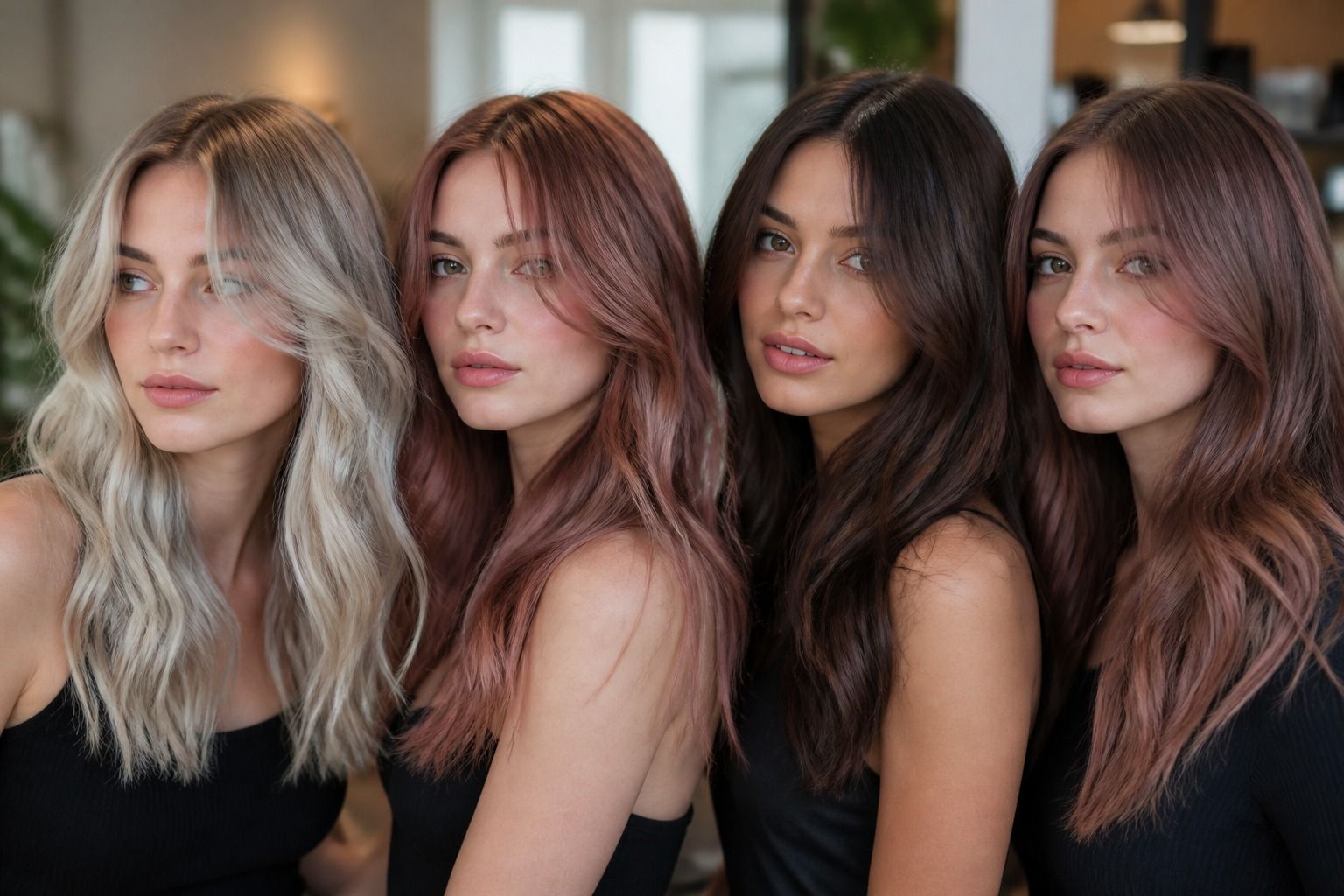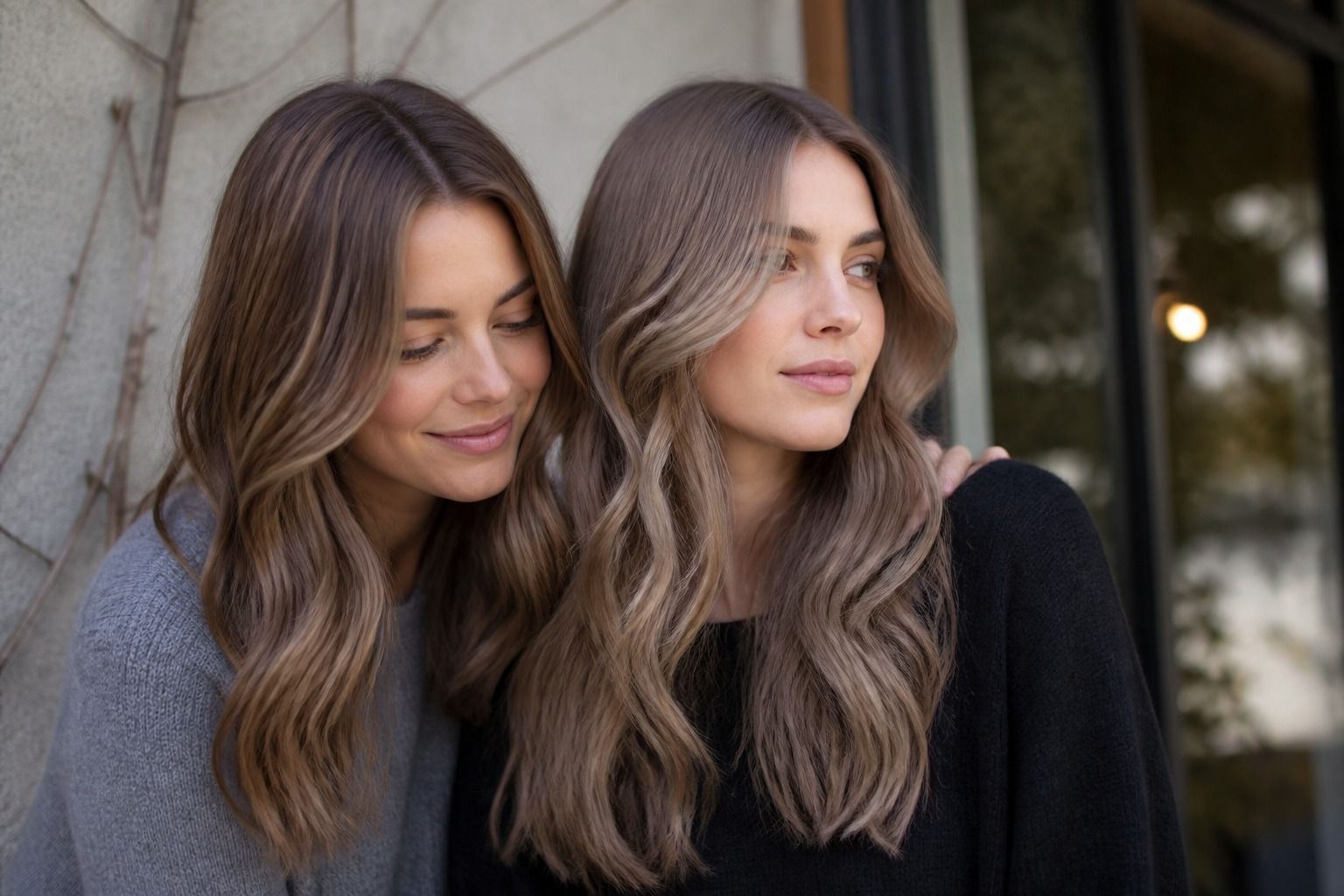
Soft Summer hair color works best when the shade looks slightly softened before it even hits the light. The goal is not to make hair look gray or dull. It is to avoid colors that shout over gentle skin, low contrast features, and cool-neutral undertones. A good shade still has depth, shine, and shape; it just sits closer to mushroom brown, ash brown, smoky beige blonde, soft bronde, and the quieter side of rose or berry.
What makes a Soft Summer color look soft
The easiest way to understand Soft Summer is to look at contrast first. If your natural coloring is low to medium contrast, very dark espresso, bright copper, blue-black, and creamy yellow blonde can make the hair look separate from the face. The color may be beautiful on its own and still feel borrowed. Soft Summer usually needs a muted hair color, meaning the shade has a little gray, beige, taupe, or smoke mixed into it instead of pure warmth or pure brightness.
The brown and bronde shades that usually blend well
Medium ash brown is the safest starting point for many Soft Summers because it keeps depth without the heaviness of near-black brown. It can sit around level 5 or 6 depending on the natural base. On someone with naturally dark blonde or light brown hair, a medium ash brown gloss can add polish without announcing a full makeover. On a darker brunette, the same idea may need soft face framing or a lifted bronde ribbon so the result does not become one dense block.
Mushroom brown is popular because it describes the right family: taupe, beige-gray, and brown mixed together. The catch is that salon photos can swing from elegant to muddy. If your hair is very porous, mushroom brown can grab too cool on the ends and leave the roots warmer. A colorist can avoid that by filling the most faded pieces, using a root shadow, and placing the coolest toner only where the hair can handle it.
Soft bronde works well when you want movement but not obvious stripes. The best version has a muted brown base with fine beige or ash-beige pieces that start away from the scalp or melt through the mid-lengths. Thick golden ribbons can look too sunny next to Soft Summer skin. Very icy ribbons can look too artificial. Fine, smoky pieces are quieter, and they grow out with less drama.
Choosing blonde without making the face look flat
Blonde is where Soft Summer hair colors can go wrong fastest. A blonde that is too yellow may fight the skin. A blonde that is too white can erase the face and make the hair look wig-like, especially when the eyebrows and lashes are naturally muted. The useful middle is smoky beige blonde: not gold, not silver, and not the bright vanilla blonde that looks good in a studio photo but turns loud in daylight.
If you are naturally light, the colorist may be able to keep the base close to your own level and soften it with lowlights, gloss, and a few cool-beige highlights. If you are naturally brunette, pushing to a pale blonde usually means more warmth during the lift, more toner dependence, and more visible regrowth. A root shadow can help because it keeps depth near the face and lets the lighter pieces feel intentional instead of brassy by week four.
Be careful with the word ash blonde. Some clients use it to mean no orange. Some colorists hear a much cooler, grayer result. For Soft Summer, ash can be useful in small amounts, but a smoky beige or pearl beige finish is often kinder. Bring references that show the same depth you want, not just the same tone. A level 8 beige blonde and a level 10 icy blonde are different commitments, even if both look cool on a screen.
How warmth appears after a few washes
Most soft color problems show up after the first week, not in the salon chair. Fresh toner can make almost any lifted hair look balanced under good lighting. After several washes, the underlying pigment starts peeking through. Brown may reveal red or orange. Blonde may reveal yellow. Bronde can separate into a cool root and warm ends, which is the classic reason a soft summer hair color looks right on day one and slightly rusty by day twenty.
Porosity decides a lot. Ends that have been highlighted for years may drink toner quickly, look smoky for a few shampoos, then fade unevenly. Virgin roots behave differently. Heat styling, hard water, strong clarifying shampoos, and frequent sun exposure all speed up the fade pattern. This is why a colorist may suggest a gentler lift, a gloss schedule, or more lowlights instead of promising that one toner will solve every warm reflection.
Purple shampoo is not a universal fix. It can help yellow blonde, but it will not correct orange brunette warmth well, and overuse can make beige blonde look dusty or patchy. Blue-based products may be more relevant for orange, but they can also dull the hair if used too often. For Soft Summer, maintenance should keep the color quiet, not turn it smoky at any cost. If the hair starts looking dry, matte, or greenish, the correction has gone too far.
Practical notes to take to the colorist
A useful salon note is specific without pretending you can formulate the color yourself. Start with your natural level, what you dislike after fading, and how much upkeep you can tolerate. For example: I want a muted cool-neutral brown or bronde, I do not want copper or yellow gold, my ends pull warm after three weeks, and I can come in for a gloss every eight to ten weeks. That gives the colorist more to work with than asking for Soft Summer and hoping the label translates.
Ask for a plan for the hairline and the ends. The hair around the face decides whether the shade feels flattering in real life, while the ends decide whether the finish looks expensive or tired. A soft root shadow can prevent a blonde from looking too stark. A few lowlights can stop highlighted hair from becoming one pale sheet. A gloss can tune the tone, but if the base is lifted too warm or the ends are damaged, toner alone will not carry the whole look.
Photos help, but choose them carefully. Look for references with similar natural depth, similar eyebrow color, and similar lighting. A mushroom brown photo shot beside a window may not match a salon photo taken under warm bulbs. If every saved image has a filter, tell the colorist what you actually like: the taupe brown base, the soft bronde ribbons, the shadowed root, or the absence of orange. The more precise the note, the less likely you are to end up with a pretty color that belongs to someone else.
When to bend the seasonal label
Seasonal color can be useful, but it should not become a cage. Some Soft Summers look better with a touch of warmth because their eyes, freckles, or natural base need it. Others can handle deeper ash brown because their eyebrows and lashes have more contrast. If a strict muted palette makes you look tired, the problem may be depth, placement, or finish rather than the entire Soft Summer idea.
Dusty rose, mauve brown, and soft berry accents can work when they are muted and placed with restraint. A veil of dusty rose over light brown or blonde can feel wearable; a bright pink panel usually fights the same softness you were trying to protect. The same logic applies to red. A cool, muted burgundy-brown may sit better than copper, but it still needs enough brown in it to avoid looking theatrical.
The best caveat is personal history. If your hair always fades warm, choose a shade that still looks acceptable when it softens between appointments. If your budget or schedule makes frequent glossing unrealistic, avoid a color that only works freshly toned. A balanced Soft Summer result should survive normal life: daylight, dry shampoo, ponytails, winter sweaters, and the weeks between salon visits. When the color keeps looking calm without constant rescue, you have probably found the right version.